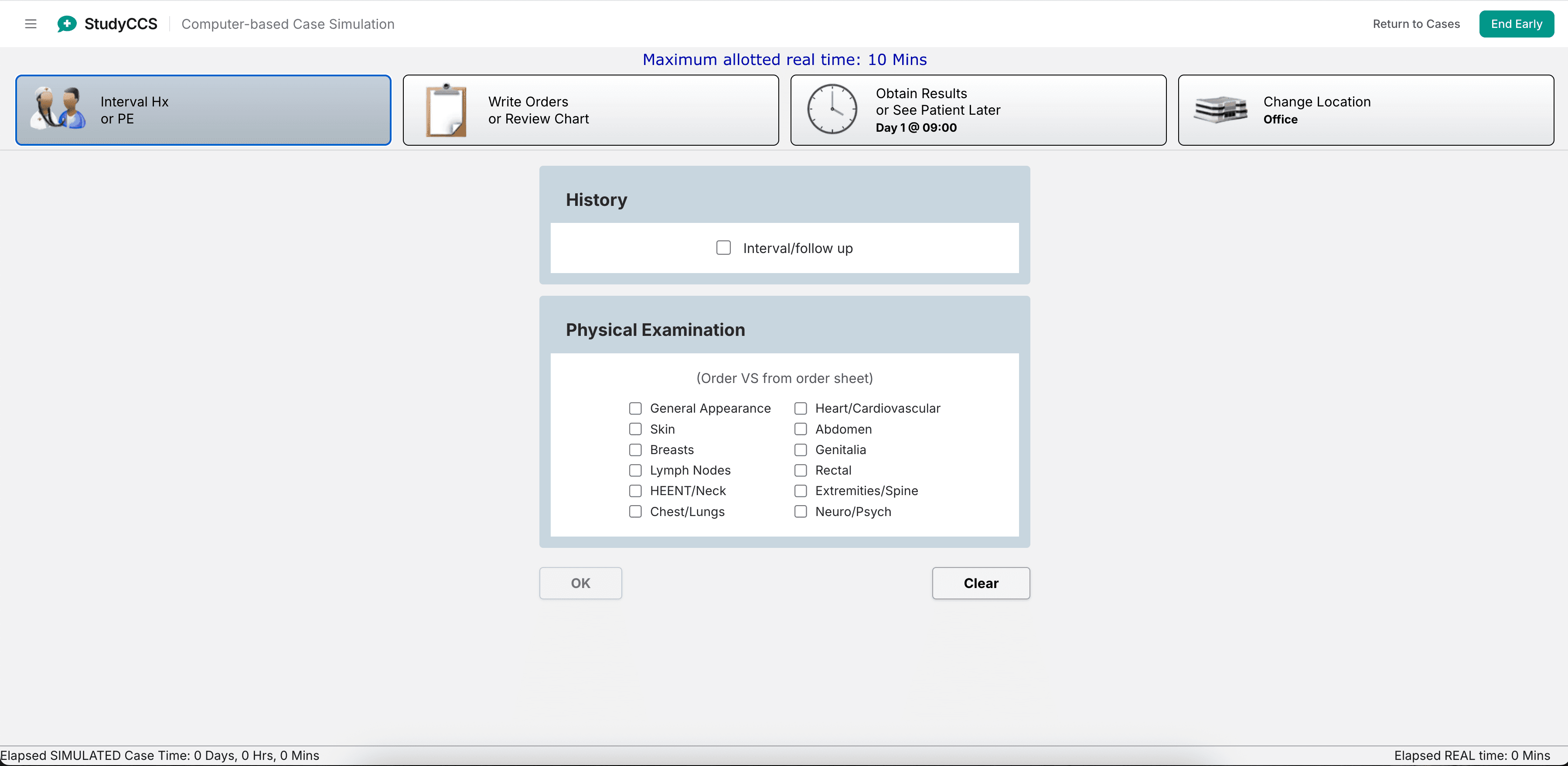
Most people take Step 3 during residency, which means the real constraint is not how much material there is. It is that you are working, and the hours you have left are unpredictable, scattered, and low-energy. A plan built for a free month will fail in week one of a busy rotation.
This is a plan built the other way around: around the rotation you are actually on. The case simulations in particular reward a kind of practice that fits residency better than it fits a study-leave block, because a single case takes twenty-five minutes and the skill it builds is one you use at work every day.
Start from your rotation schedule, not a calendar
The mistake is writing a plan in units of weeks — "four weeks of questions, two weeks of cases." Rotations are not interchangeable. Write your plan in units of rotation intensity instead, and assign each block a realistic daily target before you know what day it is.
- Heavy inpatient or night float: maintenance only. One short block of questions, or one case, on the days you can. Do not schedule anything you will feel guilty about missing.
- Moderate rotations with predictable hours: your workhorse weeks. This is where the bulk of question volume and most case practice belongs.
- Clinic, elective, or research: your heavy lift. If you have an elective in the two to four weeks before your exam date, that is where the intensive block goes — schedule your test date around it if you still can.
Map your blocks before you pick a test date, if you have the choice. An exam date two weeks after an elective ends is worth more than one picked for a round number.
Pick the test date early and work backwards
The single most common regret is waiting. The overlap with what you studied for the previous exam decays, and the clinical knowledge you are gaining on the wards does not replace the exam-specific material. Register for a date, then build the plan to fit it rather than studying indefinitely and hoping to feel ready. If you are unsure whether you are close, our readiness guide covers what to check.
For how long people actually give themselves, the community timelines are a more useful reference point than any single recommendation, because the spread is wide and depends almost entirely on your schedule.
Why case practice suits a working schedule
Case practice has three properties that make it unusually compatible with residency. It comes in discrete units, so one case is a complete session and you never leave something half-finished. It takes a predictable amount of time, so you can fit it into a known gap instead of needing an open-ended evening. And it uses the same reasoning you spent your whole clinical day doing — ordering, reassessing, escalating — so it feels like less of a gear change than sitting down with a textbook at nine at night.
What it does need is your attention for the full case. A case worked in a distracted ten minutes teaches you very little, because the whole skill is sequencing under pressure. Better to do three real cases a week than seven interrupted ones.
The three-slot week
Rather than a daily hour you will not have, aim for three named slots and let everything else be a bonus:
- One long slot on your lightest day: a timed case, reviewed properly afterwards, plus a block of questions. Sixty to ninety minutes.
- One medium slot midweek: a block of questions, or a single case if you missed the long slot. Thirty minutes.
- One short slot that you can do anywhere: reviewing your own error list, drilling order names, or working through a cheat sheet. Ten to fifteen minutes, post-call or on a commute.
Three slots is a target you can hit on a bad week, which is the point. A plan you keep at sixty percent beats a plan you abandon. The case study schedule has a fuller version of this to adapt.
Use post-call and low-energy time for the right thing
Not all study time is equivalent, and the mistake is spending your scarce good hours on your easiest task. Match the task to the state you are in:
- Fresh and uninterrupted: timed cases. This is the only task that genuinely requires it.
- Tired but functional: question blocks with explanations, or reviewing cases you already ran.
- Post-call or fried: order-name drilling, mnemonics, cheat sheet review. Low cognitive load, real returns, no decisions required.
- Dead time — commute, waiting, between cases: your own error list from previous sessions. It is the highest-yield thing you own and it fits in five minutes.
Typing order names faster is the clearest example of a task that works when you are tired, and speed order practice is built for exactly those gaps.
What to cut when the week falls apart
It will fall apart. Decide the order of cuts in advance so you are not making the decision at ten at night:
- Cut first: reading. Textbook or review-book reading is the lowest-yield activity per minute at this stage and the easiest to rationalize.
- Cut second: question volume. Fewer questions, same careful review of the ones you do.
- Cut last: case practice and your error list. These are the two things nothing else substitutes for.
And protect one thing absolutely: do not let studying degrade your clinical work or your sleep going into a shift. Beyond the obvious, a tired resident learns less per hour than a rested one, so the trade is not even favorable on its own terms.
The last two weeks
If you can engineer a lighter rotation or take leave for the final stretch, use it for case volume rather than content review. By then your written-question score is mostly set, and the simulations are where a focused two weeks still moves the needle — partly because most people arrive underprepared for them specifically, and partly because the skill is mechanical enough to improve quickly.
In those two weeks: run cases most days, keep a running list of orders you fumbled, re-run the case types you did worst on, and spend one session on the preventive care and discharge items, which are the most reliably forgotten points and the fastest to learn.
If you want to find out where you stand before you build the plan, start with a free practice case or the diagnostic test and plan from the result rather than from a guess.